RSIvsStochastic
Same family, very different behaviour. RSI is the steady, reliable read; Stochastic RSI is the hair-trigger version. Here's when each one earns its pane.
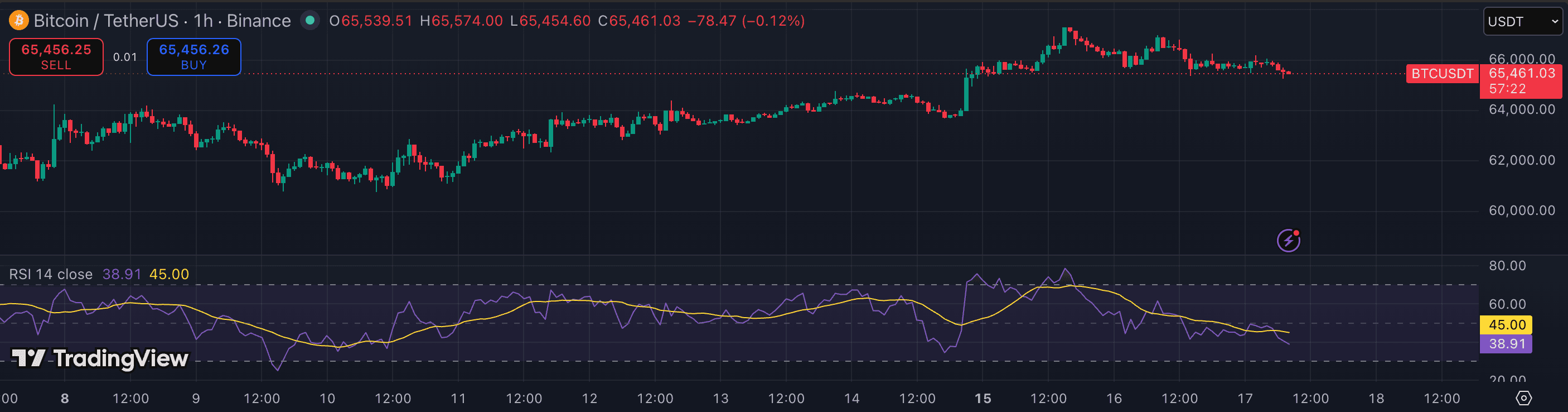
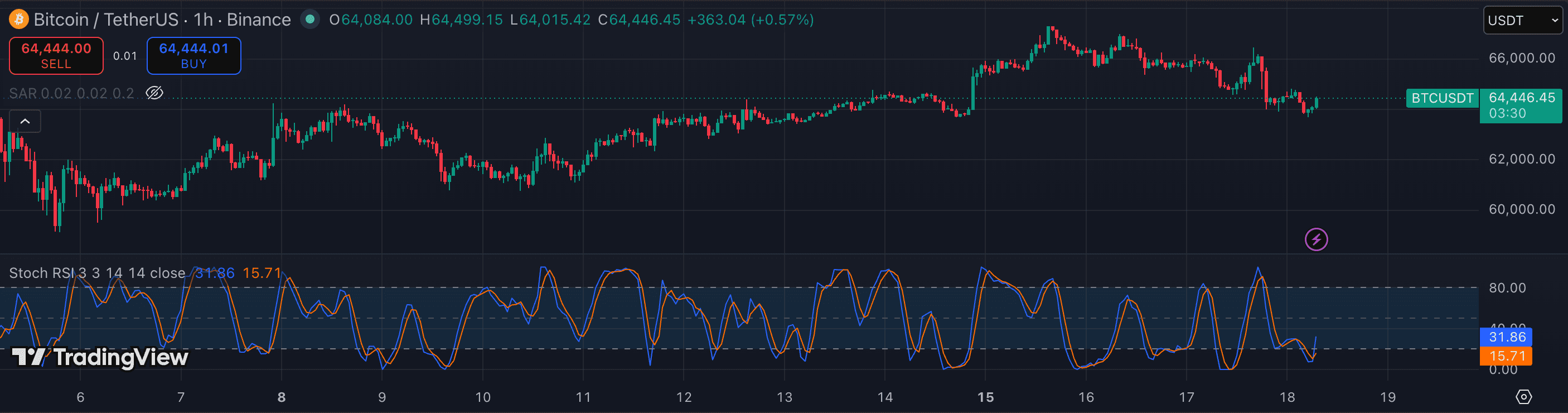
The attributes that matter.
| Attribute | RSI | Stochastic |
|---|---|---|
| Category | Momentum | Momentum |
| Default period | 14 | 14 (RSI) + 3, 3 (K/D) |
| Output | Single line, 0–100 | %K + %D lines, 0–100 |
| Sensitivity | Moderate | High — hits extremes far more often |
| Best timeframe | 1h · 4h | 15m · 1h |
| Divergence quality | ★★★★☆ | ★★☆☆☆ |
| Best for | Trend read + reversals | Entry timing in a trend |
| Worst in | Tight ranges | Ranges — fires constantly |
Which should you choose?
RSI is the better primary read: it's calmer, makes better divergences, and the 50-level regime shift is a durable edge on BTC/ETH 1h+. Stochastic RSI is better as a precision entry timer — it reaches the oversold zone fast in an uptrend pullback, giving you a clean K/%D cross to trigger the position.
Running both is a common and sensible setup: RSI on the higher timeframe for bias and divergence, Stoch RSI on the entry timeframe for the actual trigger. If you only have pane space for one, RSI wins — it carries more signal per bar.
- You need a primary momentum/divergence read
- You trade BTC/ETH on 1h or above
- You want fewer, higher-quality signals
- You need precise pullback-entry timing
- You already have a trend/structure bias established
- You scalp 15m with a clear directional filter
Other comparisons
Not investment advice. PineRadar is an editorial directory — links may be affiliate. Always test indicators on a demo account.