SupertrendvsMoving Average
Both are trend tools that tell you which way the market is moving — but they do it differently, and those differences matter a lot in crypto's volatile conditions.
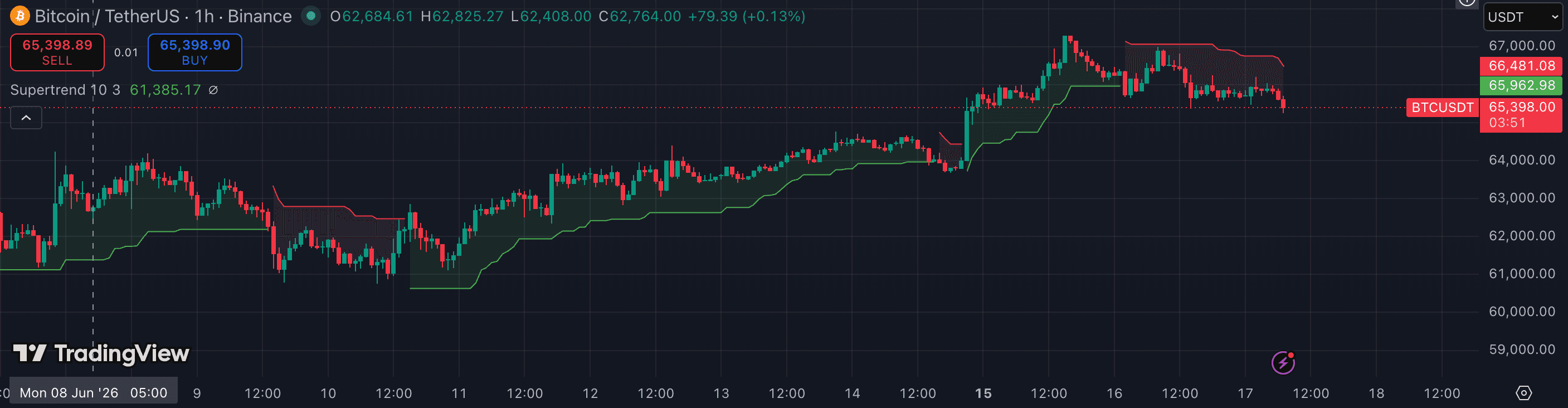
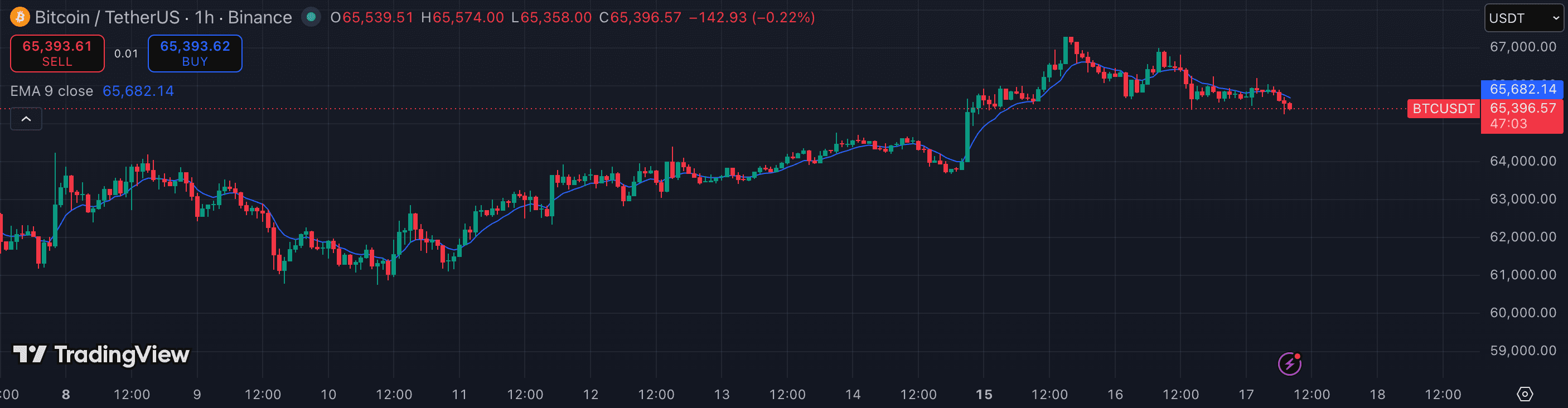
The attributes that matter.
| Attribute | Supertrend | Moving Average |
|---|---|---|
| Category | Trend | Trend |
| Output | Single flipping line | Smooth trailing line |
| Calculation basis | ATR bands | Average of past closes |
| Best timeframe | 15m · 1h · 4h | 1h · 4h · 1D |
| Chop handling | Good (ATR widens in volatility) | Poor — whipsaws in ranges |
| As a trailing stop | Excellent — built-in | Weak — level shifts each bar |
| Signal type | Flip (clear direction change) | Cross or pullback (less precise) |
| Worst in | Pure, choppy ranges | Any ranging market |
Which should you choose?
A moving average is simpler but also more fragile in crypto's choppy, volatile conditions: the line shifts every bar, produces constant crosses in sideways markets, and has no built-in stop mechanism. Supertrend's ATR-based band automatically widens when volatility rises, which absorbs much of the range noise that makes EMA crosses costly. For active crypto trading, Supertrend is the more robust default trend tool.
That said, the moving average does something Supertrend doesn't: it doubles as a dynamic support/resistance level you can pull back to during a trend. The most effective stack combines both — a higher-timeframe Supertrend to define the trend direction, and a pullback to the EMA on the entry timeframe for a lower-risk entry rather than chasing the flip candle itself.
- You want a clear, decisive trend-flip signal
- You trade volatile crypto and get burned by EMA whipsaw
- You want a built-in trailing stop that adapts to volatility
- You want a pullback re-entry level during a trend
- You prefer a tool that doubles as dynamic support/resistance
- You're a beginner looking for the simplest possible trend read
Other comparisons
Not investment advice. PineRadar is an editorial directory — links may be affiliate. Always test indicators on a demo account.