BollingervsKeltner
Both are volatility envelopes drawn around a moving average. But they measure volatility differently — and that difference is the basis of one of crypto's cleanest breakout setups.
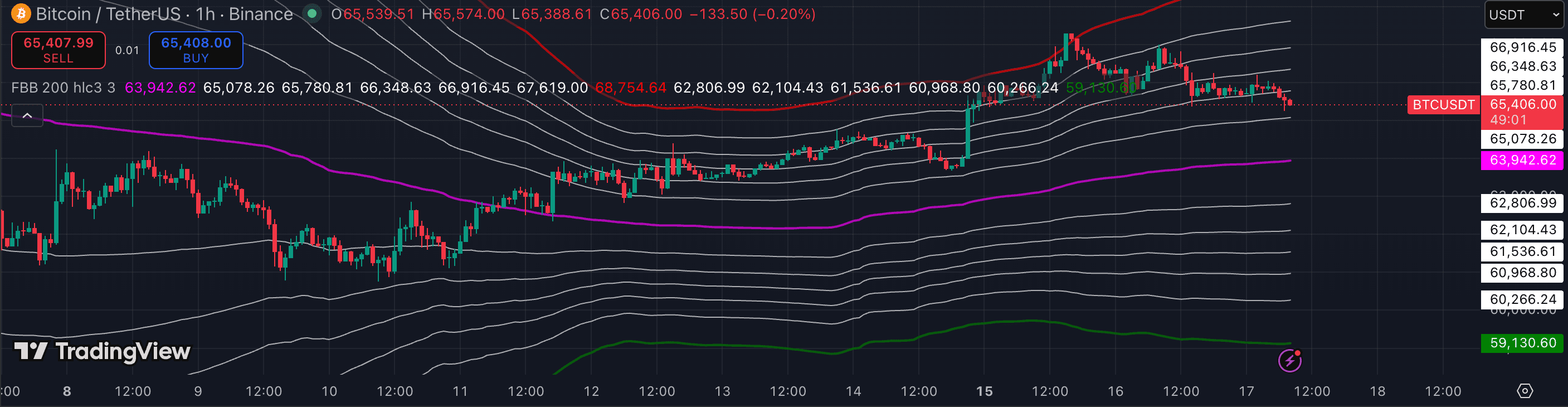
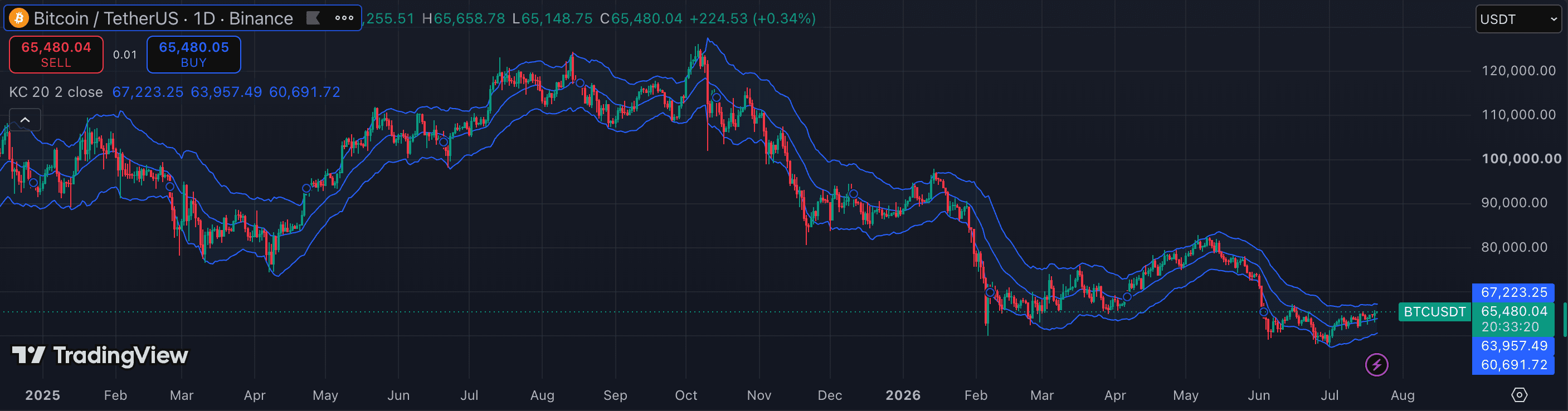
The attributes that matter.
| Attribute | Bollinger | Keltner |
|---|---|---|
| Category | Volatility | Volatility |
| Band calculation | Standard deviation | ATR multiple |
| Default period | 20, ±2 std dev | 20 EMA, ×2 ATR |
| Width behavior | Spiky — reacts fast to price moves | Smoother — tracks true-range volatility |
| Best timeframe | 15m · 1h · 4h | 1h · 4h · 1D |
| Best for | Mean reversion + squeeze detection | Squeeze confirmation + trend re-entry |
| Worst in | Strong trends (band tags ≠ reversals) | Standalone use — needs BB for context |
| Squeeze role | Inside KC = squeeze trigger | Outside BB = squeeze released |
Which should you choose?
Bollinger Bands and Keltner Channels are most powerful when used together, not against each other. The Squeeze Momentum setup — where Bollinger Bands contract inside the Keltner Channel — is one of the cleanest breakout reads in crypto. When BB is inside KC, volatility is compressing. When BB expands back outside KC, the move is beginning.
If you must choose one standalone: Bollinger Bands are the better mean-reversion tool because their standard-deviation width spikes sharply on fast moves, making overextension visible. Keltner Channels, with their smoother ATR-based width, are the better trend envelope — the midline EMA doubles as a clean pullback re-entry zone in uptrends.
- You trade mean reversion and range setups
- You want to see overextension quickly
- You're using the Squeeze Momentum indicator
- You trade breakouts and want a smoother envelope
- You use the midline as a trend re-entry level
- You want less noise than Bollinger on choppy crypto
Other comparisons
Not investment advice. PineRadar is an editorial directory — links may be affiliate. Always test indicators on a demo account.