ADXvsMACD
ADX and MACD both answer the question 'is momentum here?' — but from completely different angles. ADX measures trend strength without caring about direction; MACD measures momentum shift with a built-in directional read. Knowing which question you're asking determines which one belongs on your chart.
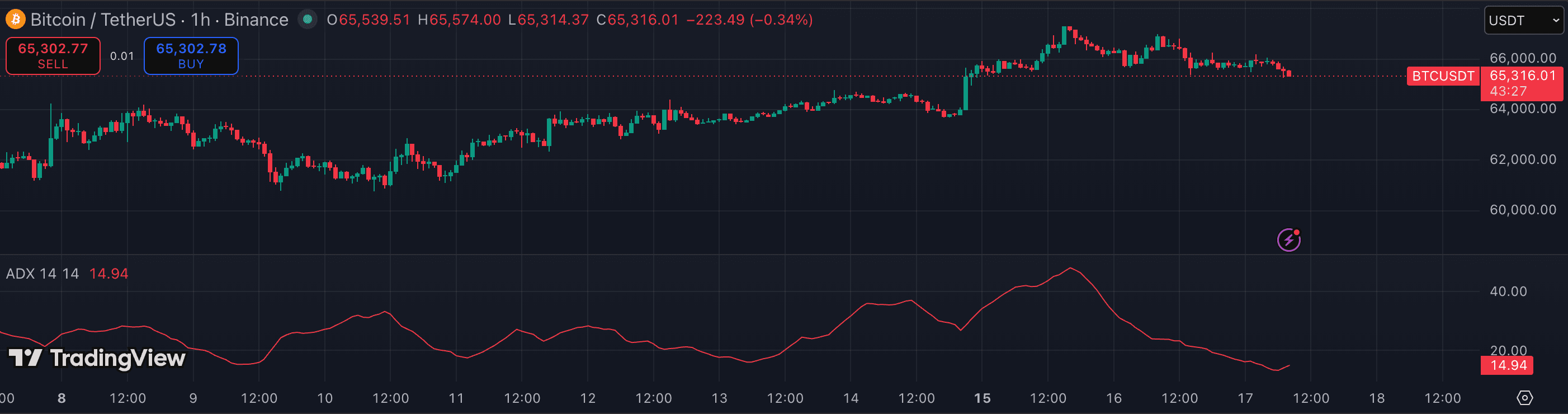
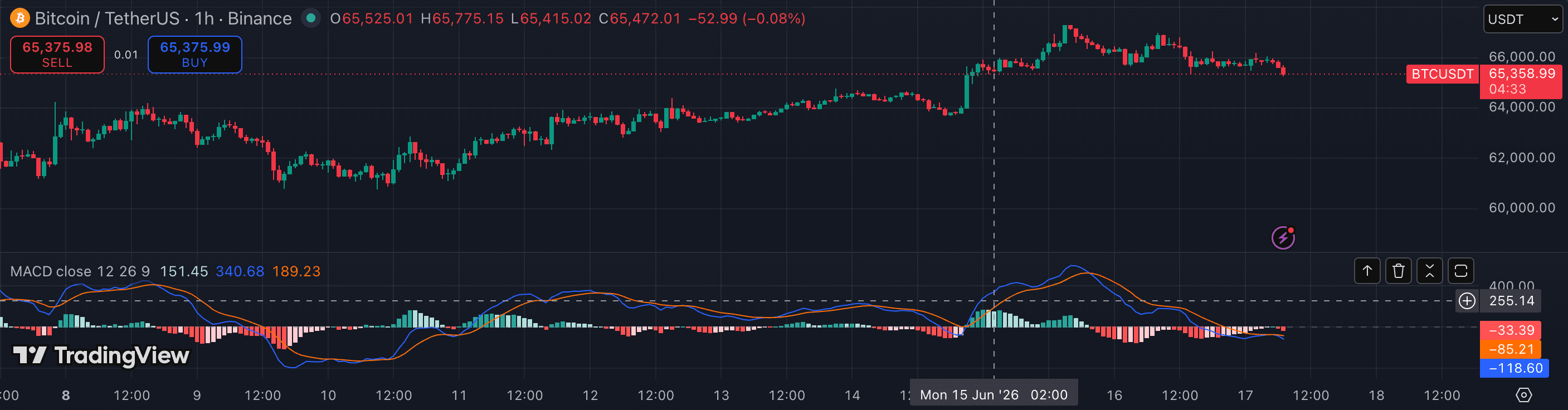
The attributes that matter.
| Attribute | ADX | MACD |
|---|---|---|
| Category | Trend strength | Momentum + trend |
| Default period | 14 (DI lines ±14) | 12, 26, 9 |
| Output | 0–100 strength line + ±DI lines | Two lines + histogram |
| Direction signal | None — strength only | Yes — via zero-line and crossovers |
| Best timeframe | 1h · 4h · 1D | 1h · 4h · 1D |
| Lag | High — lagging by design | Medium-high |
| Best for | Filtering range vs trend regimes | Momentum entry confirmation |
| Worst in | Ranging markets — gives false positives | Choppy sideways markets |
Which should you choose?
ADX tells you how strong a trend is — not whether to buy or sell. An ADX reading above 25 means a genuine trend is active; below 20, the market is ranging and trend-following entries will get chopped. The ±DI lines can suggest direction, but their crossovers generate too many false signals on crypto to be used as standalone entry triggers.
MACD adds a directional dimension ADX lacks: the histogram shows whether buying or selling momentum is accelerating or decelerating, and the zero-line location tells you which regime you're in. For entry confirmation in a confirmed trend, MACD's histogram is more actionable than any ADX read.
The most productive setup uses both together rather than choosing: ADX as a regime filter (trade MACD signals only when ADX is above 20–25, skip them when it's below), and MACD for the actual entry signal direction. ADX alone doesn't tell you which way to trade; MACD alone doesn't tell you if the trend is real enough to trust.
- You need to know whether the market is trending or ranging before committing
- You want to avoid trading MACD signals into choppy sideways tape
- You use trend-following systems and want a regime filter
- You need an entry signal with a directional lean
- You already have a trend bias established and want momentum confirmation
- You trade swing setups where histogram divergence is meaningful
Other comparisons
Not investment advice. PineRadar is an editorial directory — links may be affiliate. Always test indicators on a demo account.