ADXvsATR
ADX and ATR are both rooted in Wilder's work and both use a 14-period default — yet they measure completely different things. ADX tells you whether a trend is strong enough to trade; ATR tells you how much price is moving so you can size your risk. Confusing the two costs money.
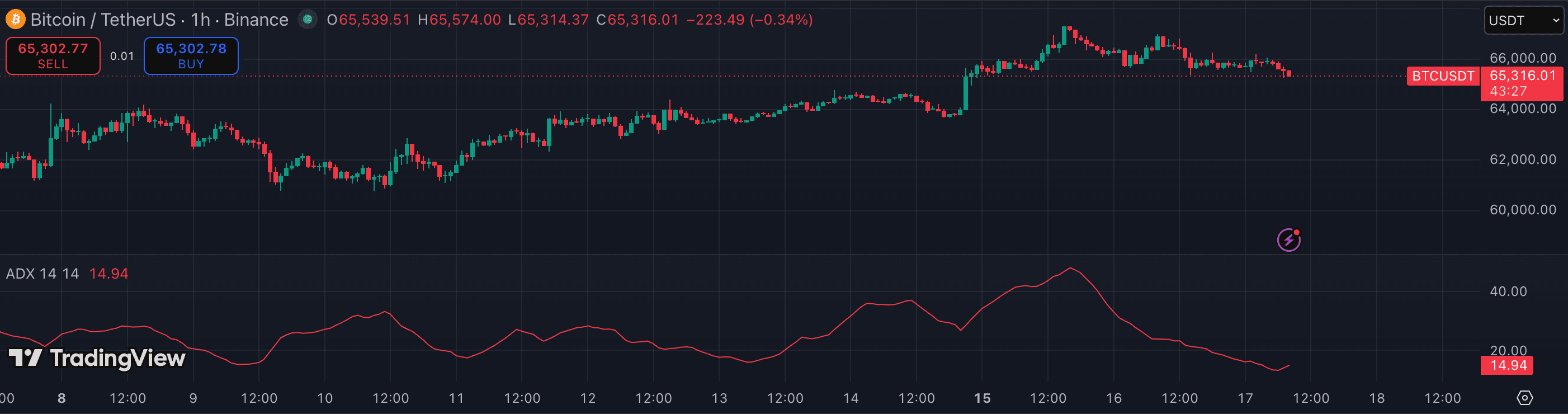
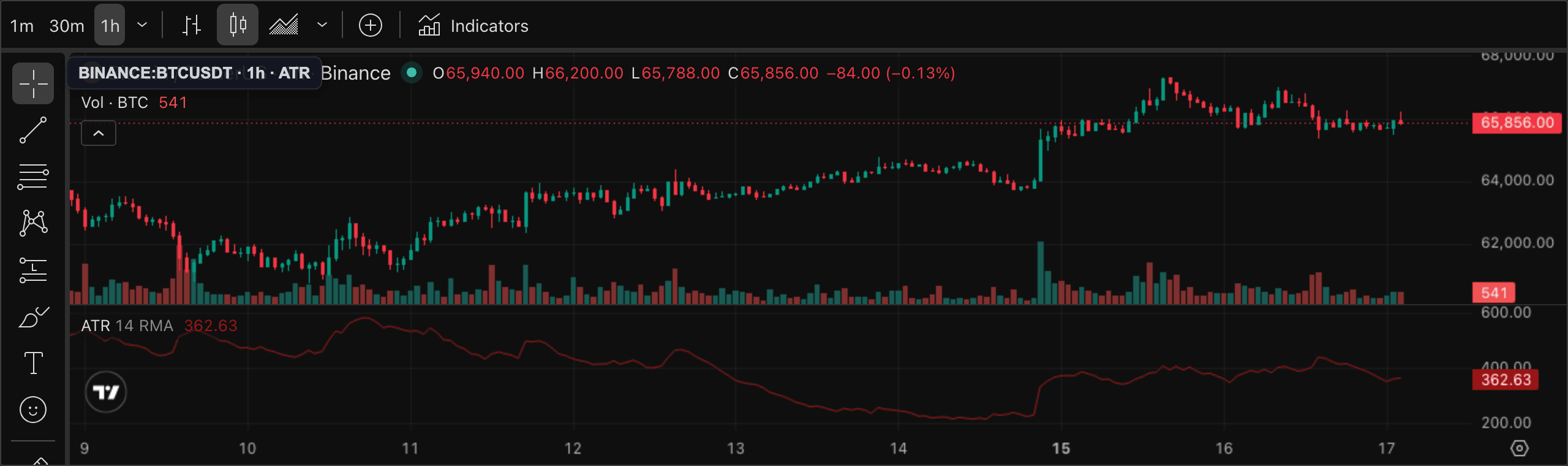
The attributes that matter.
| Attribute | ADX | ATR |
|---|---|---|
| Category | Trend strength | Volatility |
| Default period | 14 | 14 |
| Output | ADX line + +DI / −DI | Single value (in price units) |
| Measures | Strength of the prevailing trend | Average candle range (volatility) |
| Directional? | No — purely strength | No — purely magnitude |
| Best timeframe | 1h · 4h · 1D | 15m · 1h · 4h · 1D |
| Best for | Filtering chop from real trends | Sizing stops and targets |
| Worst used as | Entry trigger (no direction) | Signal generator (no direction) |
Which should you choose?
ADX and ATR are not alternatives — they answer different questions and work best as a pair. ADX answers 'is there a trend worth trading right now?' A reading above 25 means enough directional energy to trust trend signals; below 20 means the market is ranging and trend tools will whipsaw. ATR answers 'how wide should my stop be?' It takes the current volatility regime and converts it into a concrete price distance you can use for position sizing.
The practical stack: run ADX to decide whether to enter a trend signal at all, then use ATR to size the stop once you do. ADX above 25 with +DI above −DI means there is a trend — set your stop at 1.5–2× ATR below entry so it breathes with the current volatility rather than a fixed percentage that has no relationship to actual market conditions.
- You want to filter trend signals and avoid chop
- You need a regime gate before trusting EMAs or Supertrend
- You want to know when to step aside rather than where to enter
- You need to size your stop and position to current volatility
- You're building on top of Supertrend, UT Bot or Keltner Channels
- You want an objective volatility read for risk management
Other comparisons
Not investment advice. PineRadar is an editorial directory — links may be affiliate. Always test indicators on a demo account.