VWAPvsMoving Average
Both draw a single line on your chart that price interacts with. But VWAP resets daily and is anchored to volume, while a moving average is a purely price-based rolling calculation. The difference matters more than it first appears.
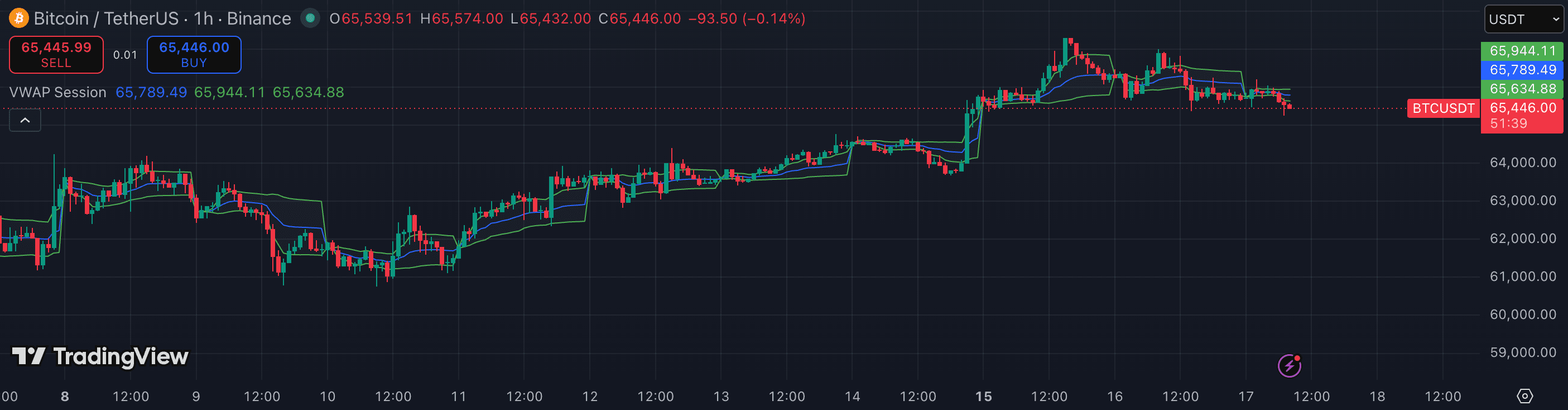
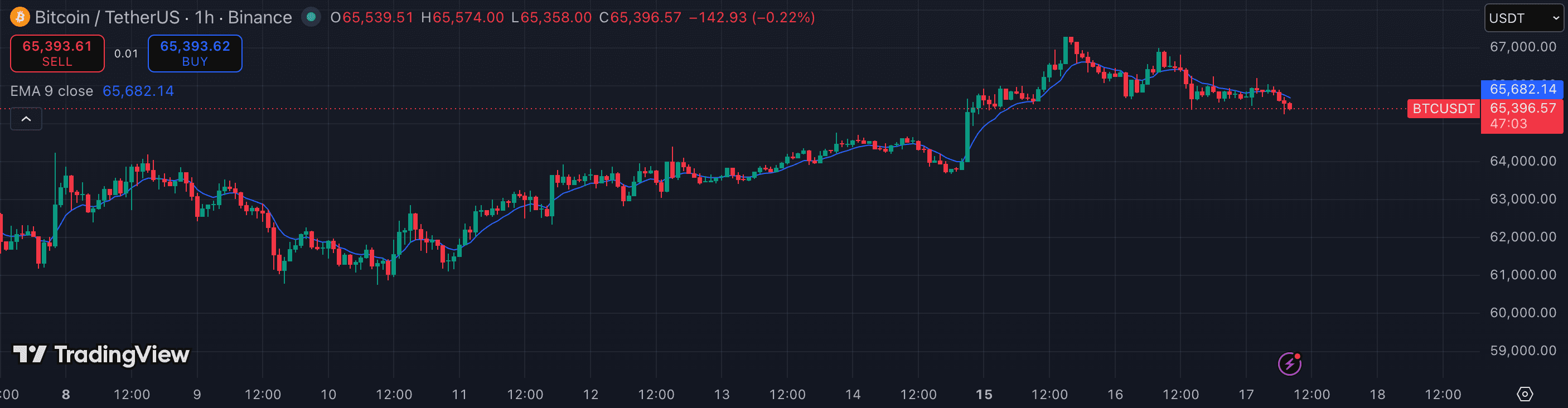
The attributes that matter.
| Attribute | VWAP | Moving Average |
|---|---|---|
| Category | Volume / price anchor | Trend |
| Calculation basis | Volume-weighted cumulative average | Price-only rolling average (SMA or EMA) |
| Resets | Yes — each session (or custom anchor) | Never — continuous rolling window |
| Best timeframe | 1m · 5m · 15m · 1h (intraday) | 15m · 1h · 4h · 1D |
| Volume-aware | Yes — price levels with heavy trading weight more | No — treats every bar equally (SMA) or recency-weights (EMA) |
| Lag | Low at open, cumulative by session end | Always lagged by the lookback window |
| Best for | Intraday fair value, session bias, entry location | Multi-session trend direction, dynamic S/R |
| Works for swing trading | Only anchored VWAP — standard VWAP resets daily | Yes — the natural choice for multi-day bias |
Which should you choose?
VWAP and a moving average solve different problems. VWAP tells you where the volume-weighted fair value sits within the current session — a price below VWAP is trading at a discount to where most of today's business happened; above VWAP is a premium. That intraday context is what makes VWAP rejections and reclaims meaningful signals for day traders. A moving average has no concept of where today's volume is concentrated; it just smooths price over a rolling window and produces a trend line that works equally well across any period.
For swing trading (4h and above), a moving average is the stronger default: it gives you a continuous trend filter across sessions, adapts to multi-day structure, and doesn't reset mid-trade. For intraday work (1h and below), VWAP is usually more actionable — especially for the first touch of the day's VWAP from above or below, where the institutional framework that watches VWAP creates self-fulfilling reactions. Running both is common: an EMA on the 4h for bias, VWAP on the 15m for intraday entry location.
- You day trade crypto on 5m–1h
- You want a session fair-value anchor for entry/exit
- You trade the open or look for institutional price reference points
- You swing trade multi-day positions
- You want a continuous trend filter that doesn't reset
- You trade any timeframe above 1h where VWAP loses its intraday context
Other comparisons
Not investment advice. PineRadar is an editorial directory — links may be affiliate. Always test indicators on a demo account.