UT Bot AlertsvsSupertrend
Both UT Bot Alerts and Supertrend are ATR trailing-stop systems that flip on trend changes. They look similar on the chart — so why do traders keep asking which one to use?
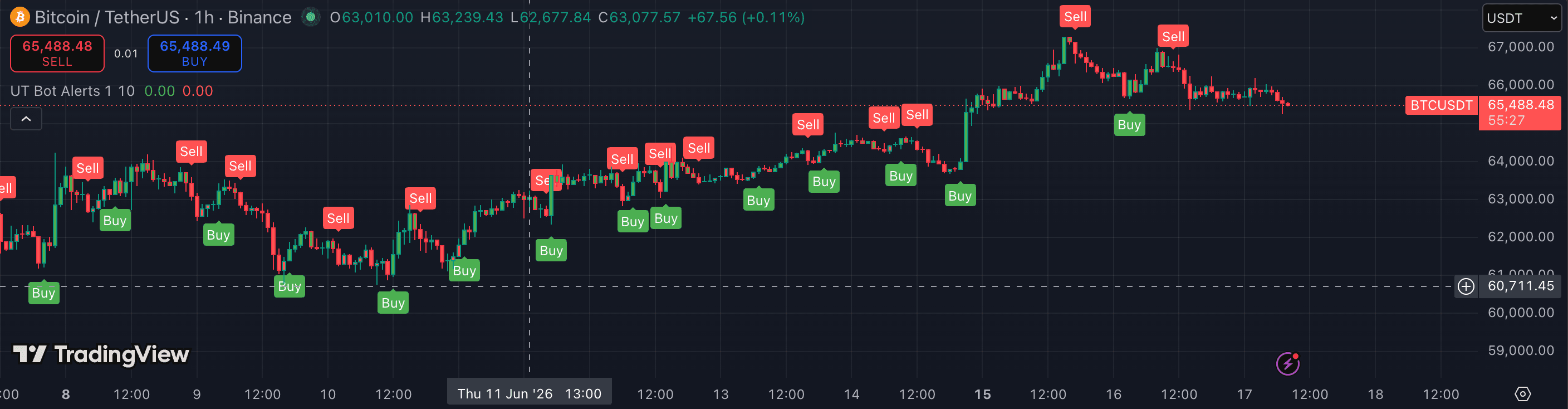
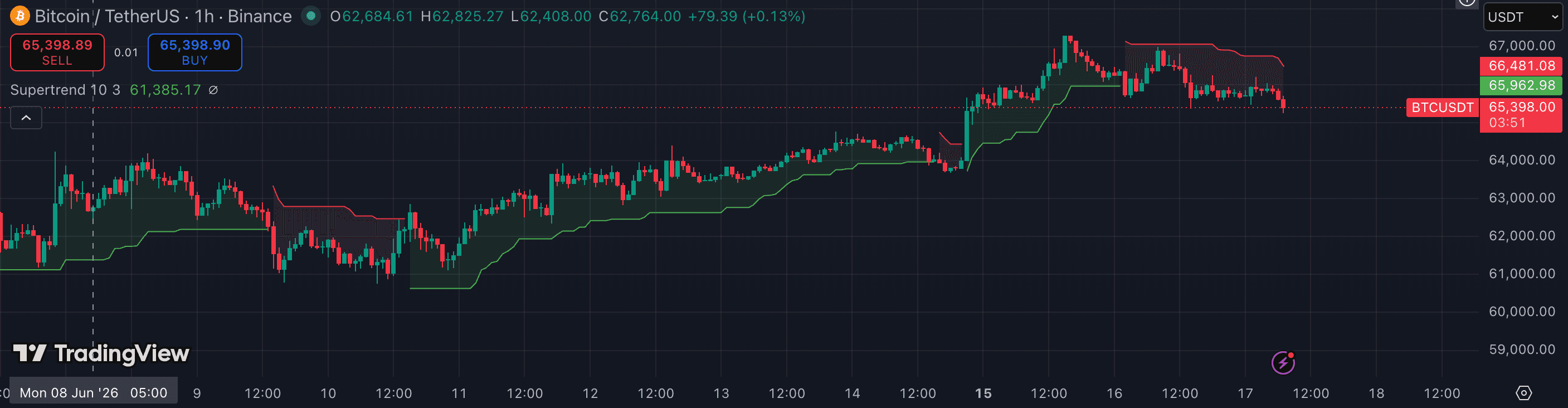
The attributes that matter.
| Attribute | UT Bot Alerts | Supertrend |
|---|---|---|
| Category | Signal / ATR trailing stop | Trend / ATR trailing stop |
| Core mechanic | ATR trailing stop + crossover signal | ATR band flip + colour change |
| Built-in alerts | Yes — ships with alert conditions | No — must create manually |
| Tuning inputs | Key value (sensitivity) + ATR period | ATR period + multiplier |
| Best timeframe | 5m · 15m · 1h | 15m · 1h · 4h |
| Output | Buy/sell labels on chart | Coloured line above/below price |
| Whipsaw in ranges | High — aggressive defaults | Medium — wider band by default |
| Repaint risk | Low if used on closed bars | None on closed bars |
Which should you choose?
Mechanically, UT Bot and Supertrend do the same job: they trail an ATR-based stop and flip direction when price crosses it. The real difference is in workflow and tuning. UT Bot ships with built-in TradingView alert conditions, which makes it the faster choice for traders who want to be notified on flips without building custom alert scripts. Supertrend, by contrast, is built into TradingView's own indicator library, giving it higher liquidity of backtesting resources and a well-tested codebase.
For entry signals, UT Bot's 'key value' sensitivity control is more intuitive than Supertrend's factor-based tuning: raising the key value directly reduces signal frequency. Supertrend's ATR multiplier achieves the same outcome but less predictably. On trending assets like BTC/ETH on 1h+, Supertrend's wider default band tends to produce fewer false flips than UT Bot's aggressive defaults. For scalping on 5m–15m where alerts matter, UT Bot edges out on convenience.
- You need ready-made alert conditions without custom scripting
- You scalp 5m–15m and want quick sensitivity tuning
- You run multi-timeframe alert systems and want plug-and-play
- You trade 1h–4h trends and want fewer false flips
- You prefer a natively supported TradingView indicator
- You want a visual trailing stop line rather than buy/sell labels
Other comparisons
Not investment advice. PineRadar is an editorial directory — links may be affiliate. Always test indicators on a demo account.