RSIvsADX
RSI and ADX are both 14-period indicators rooted in Wilder's work, yet they answer completely different questions. RSI tells you momentum direction; ADX tells you trend strength — understanding the difference is more useful than choosing one over the other.
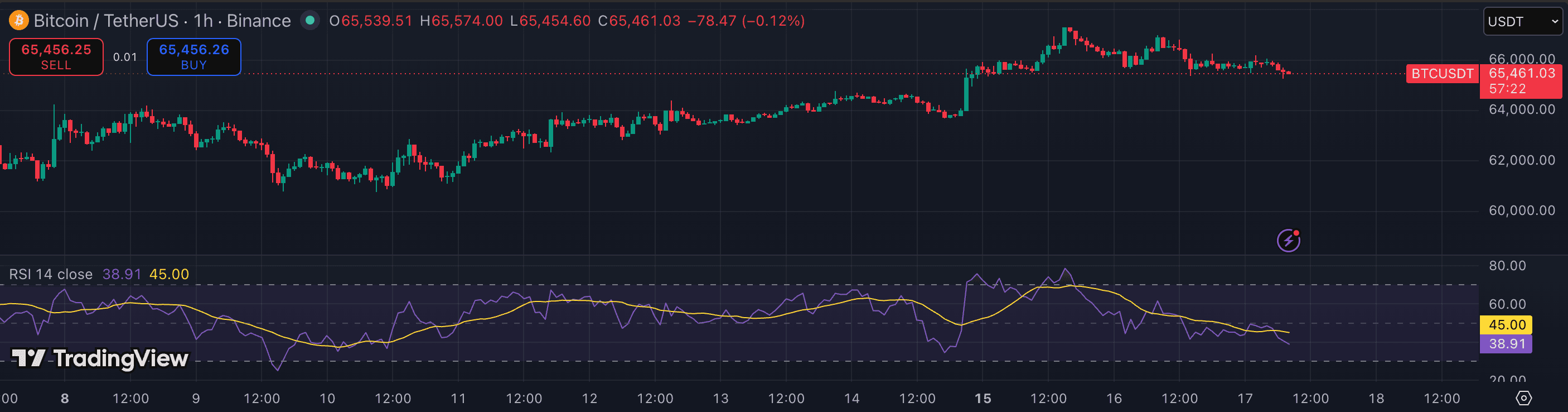
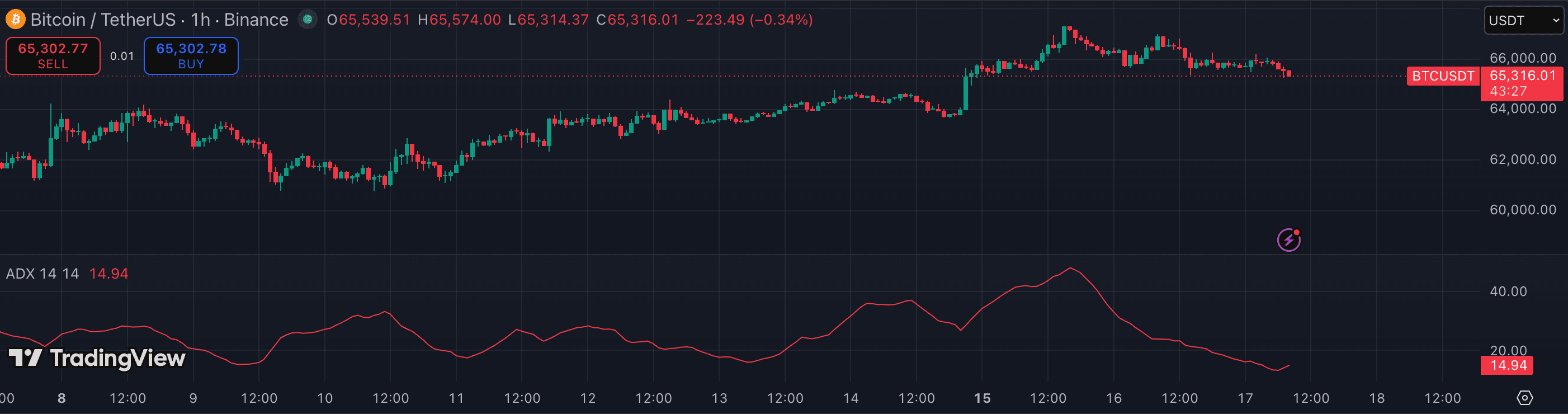
The attributes that matter.
| Attribute | RSI | ADX |
|---|---|---|
| Category | Momentum | Trend strength |
| Default period | 14 | 14 |
| Output | Single line, 0–100 | ADX line + +DI / −DI |
| Measures | Speed of price change | Strength of trend (not direction) |
| Directional? | Yes — overbought/oversold | No — purely strength |
| Best timeframe | 1h · 4h | 1h · 4h · 1D |
| Best for | Exhaustion, divergence, regime | Filtering chop from trends |
| Worst in | Strong trends (pins OB/OS) | Fast reversals (lags badly) |
Which should you choose?
RSI and ADX are not alternatives — they're complements. RSI tells you whether momentum is bullish or bearish and whether a move is overextended. ADX tells you whether the current market is trending strongly enough to trust trend signals at all. The right question is not 'RSI or ADX' but 'RSI filtered by ADX.'
The practical stack: check ADX first — if it's below 20, the market is ranging and RSI divergence setups are higher quality than trend signals. If ADX is above 25, the market is trending and RSI overbought/oversold levels lose meaning — RSI will pin in the trend direction. Use ADX to know which RSI reads to trust.
- You want to read momentum direction and divergence
- You trade both trending and ranging markets
- You want a single oscillator for swing entries
- You only want to trade when a real trend is present
- You're filtering other trend tools (EMA, Supertrend) for chop
- You want to know when to step aside, not just where to enter
Other comparisons
Not investment advice. PineRadar is an editorial directory — links may be affiliate. Always test indicators on a demo account.