CVDvsVWAP
Both CVD and VWAP are volume tools, but they answer completely different questions. CVD shows whether buyers or sellers are aggressively hitting the tape; VWAP shows where the average volume-weighted price sits for the session. Understanding the distinction will change how you read intraday crypto moves. Educational content only; not financial advice.
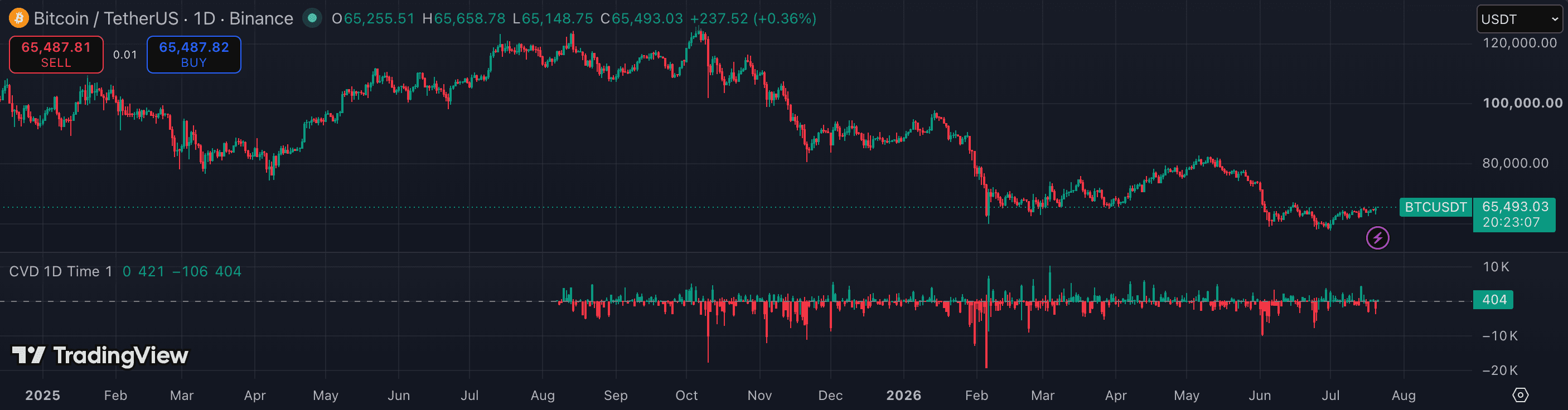
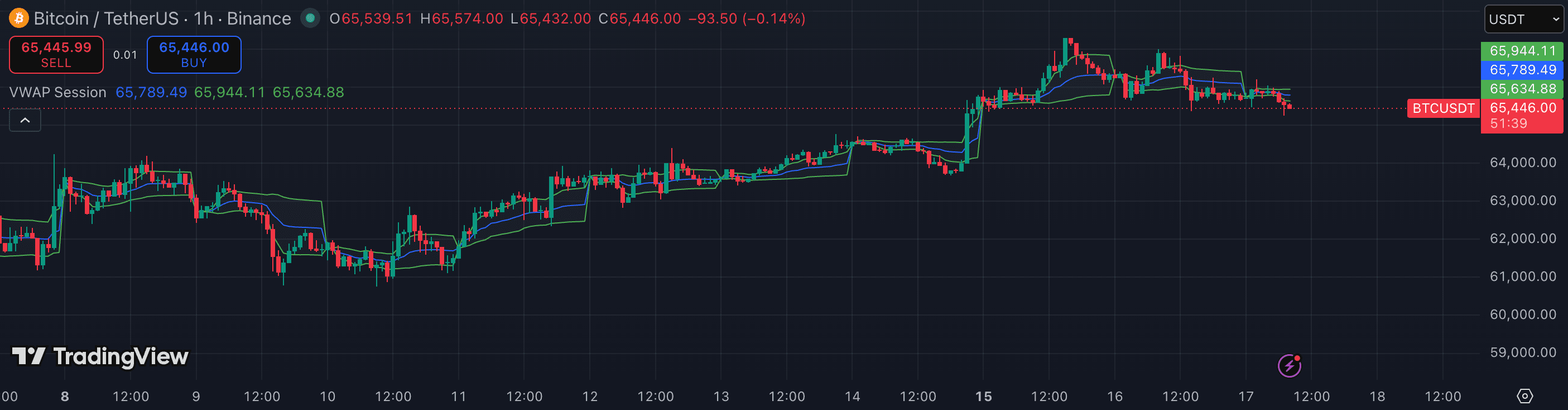
The attributes that matter.
| Attribute | CVD | VWAP |
|---|---|---|
| Category | Volume / Order flow | Volume / Price anchor |
| Measures | Net aggressive buying vs selling pressure | Volume-weighted average price for the session |
| Output | Cumulative delta line (can be positive or negative) | Single price line that acts as dynamic S/R |
| Session reset | Configurable — often resets per session | Resets each session |
| Best timeframe | 1m · 5m · 15m | 1m · 5m · 15m · 1h |
| Lag | Very low — tick-by-tick | Low — updates every bar |
| Best for | Detecting absorbed moves and order flow imbalances | Intraday directional bias and fair-value entries |
| Worst in | Low-liquidity pairs (delta data unreliable) | After session reset or in thin overnight sessions |
Which should you choose?
CVD is a context tool, not a level tool. A rising price with falling CVD (price going up but sellers are actually hitting aggressively) is a classic absorption warning — the move may be running on thin bids. CVD won't tell you where to enter; it tells you whether the participation behind a move is genuine. On liquid pairs like BTC and ETH perpetuals, CVD on 1m–5m is one of the best pre-confirmation reads you can add.
VWAP is a level tool, not a flow tool. It marks the session's volume-weighted fair value as a single line that updates every bar — and because institutions often use VWAP as a benchmark, reclaims and rejections of the line carry real participation weight. When price reclaims VWAP with conviction, it shifts the intraday bias. VWAP tells you where to consider acting; CVD tells you whether the participation is there to follow through.
The most powerful intraday setups combine both: use VWAP for the decision level and CVD to confirm the quality of the move. A VWAP reclaim on rising CVD — aggressive buying driving the reclaim — is a far higher-quality entry than a VWAP touch with flat or diverging CVD.
- You want to read order flow and detect absorption before price confirms
- You trade liquid perpetuals (BTC/ETH) on 1m–5m and watch tape dynamics
- You want to know whether a move is volume-genuine or running on thin bids
- You want a specific intraday price level to trade reactions around
- You use a directional bias tool for the session (above/below = bullish/bearish)
- You want a tool that works on any pair without needing aggregated tick data
Other comparisons
Not investment advice. PineRadar is an editorial directory — links may be affiliate. Always test indicators on a demo account.