Volume ProfilevsVWAP
Volume Profile and VWAP both answer the same question — where is value? — but they measure it completely differently. VWAP is a time-weighted moving anchor; Volume Profile is a static map of where transactions actually occurred. Traders regularly confuse them or treat them as substitutes when they are complements with distinct use cases. This comparison covers the practical differences to help you decide which belongs on your chart and when. Content is for educational purposes only.
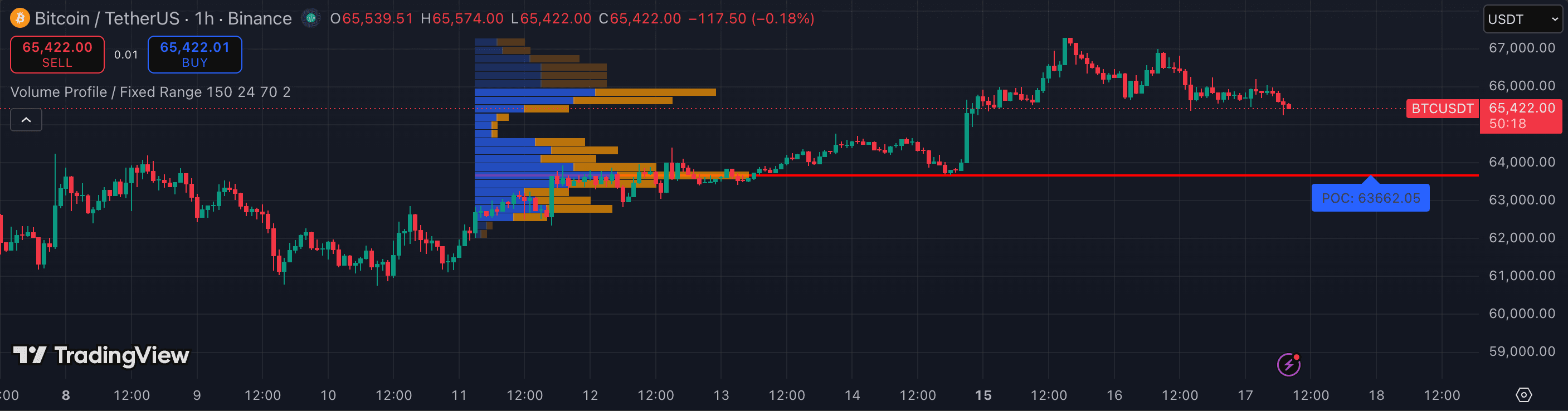
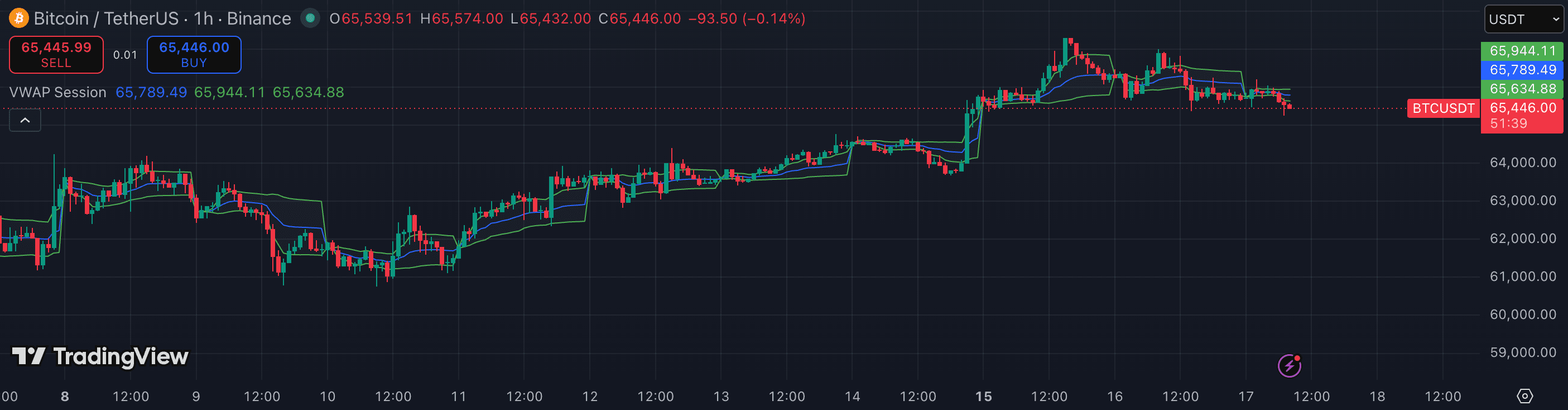
The attributes that matter.
| Attribute | Volume Profile | VWAP |
|---|---|---|
| Category | Volume / S/R mapping | Volume / price anchor |
| Output | Histogram of volume at price levels (HVN/LVN/POC) | Single cumulative average line |
| Anchor type | Fixed range or session/bar based | Session, week, month, or custom |
| Resets | Manually set range; fixed once drawn | Resets at session open (or chosen anchor) |
| Best timeframe | 15m · 1h · 4h · 1D | 1m · 5m · 15m · 1h |
| Shows trend direction | No — static S/R map only | Indirectly — price above VWAP = bullish bias |
| Repaint risk | None (fixed range) | None (closed bars) |
| Works pre-market / overnight | Yes — range spans any chosen period | Session VWAP gaps at the open |
Which should you choose?
The fundamental distinction: VWAP tells you where the average traded dollar sits right now, recalculating with each new bar. Volume Profile tells you where the market has spent the most time transacting across a chosen historical range. One is dynamic and session-relative; the other is static and structural.
In practice, VWAP is the better real-time decision tool for intraday traders — VWAP reclaims and rejections produce repeatable signals on 5m–1h because they anchor to the current session's institutional cost basis. Volume Profile excels for structural analysis: its POC, value area, and low-volume nodes explain why price keeps stalling at a given level even if VWAP has long since moved away. The highest-probability setups combine both: a Volume Profile high-volume node that coincides with the anchored VWAP is a much stronger confluence level than either tool alone.
- You trade intraday or scalp and need a live session anchor
- You want to know where institutional cost basis sits right now
- You trade during the main session where VWAP has the most participants
- You need to explain why a price level has been rejecting repeatedly
- You're analyzing structure across days, weeks, or a prior swing
- You want a static S/R map that does not change as time passes
Other comparisons
Not investment advice. PineRadar is an editorial directory — links may be affiliate. Always test indicators on a demo account.