WaveTrend OscillatorvsSqueeze Momentum
Both are momentum oscillators built to work where RSI falls short — WaveTrend for smooth wave-based divergences, Squeeze Momentum for breakout direction. They answer related but different questions, and the best crypto setups often need to know which one to trust first. Educational content only; not financial advice.
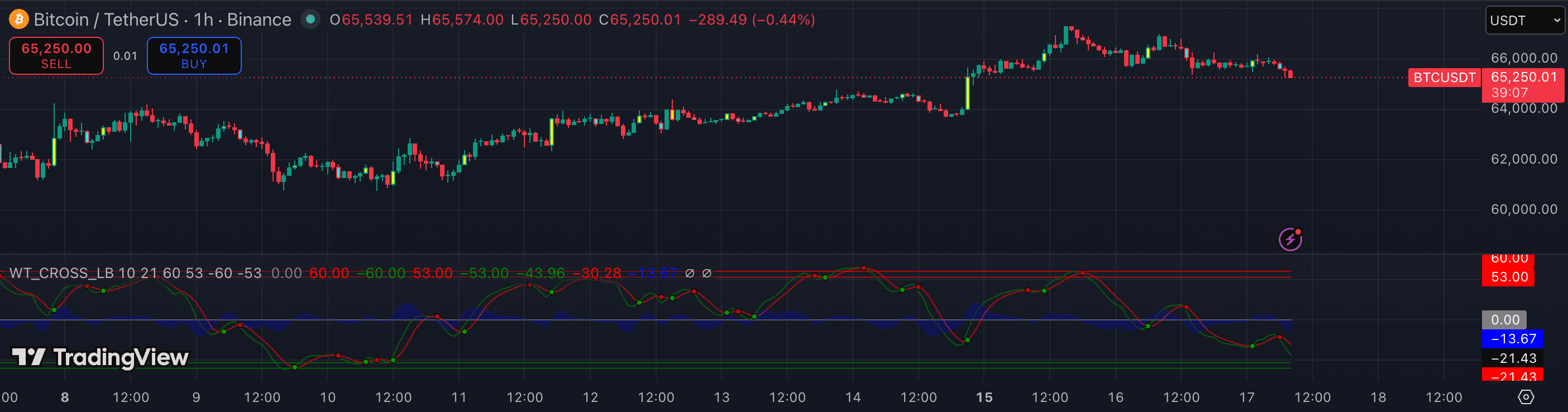
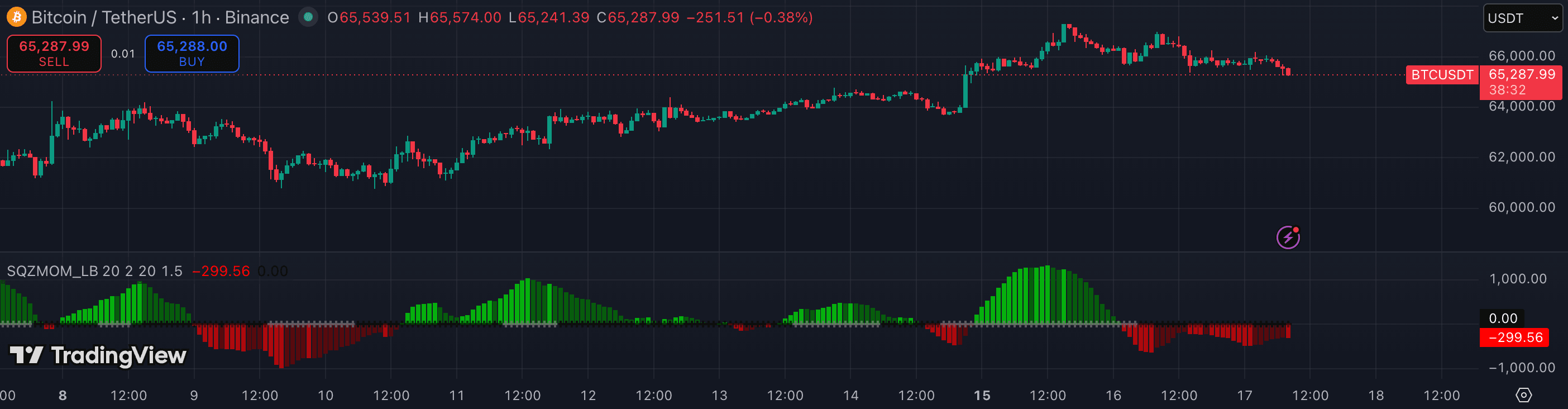
The attributes that matter.
| Attribute | WaveTrend Oscillator | Squeeze Momentum |
|---|---|---|
| Category | Momentum | Momentum + Volatility |
| Core mechanism | EMA of channel deviation | Momentum histogram inside Bollinger/Keltner squeeze |
| Primary signal | Crossovers + divergence | Histogram direction at squeeze release |
| Lag | Low-medium (smoothed) | Medium (relies on squeeze forming) |
| Best timeframe | 15m · 1h · 4h | 1h · 4h · 1D |
| Divergence quality | ★★★★☆ | ★★★☆☆ |
| Best for | Momentum turns, ranging-market entries | Breakout timing, trend continuation |
| Worst in | Strong trending markets (lags the move) | No-squeeze periods (signal goes quiet) |
Which should you choose?
WaveTrend is the better tool for identifying when momentum is turning before the candles confirm it. Its smoothed wave lines and divergence behaviour catch exhaustion in ranging and early-trend crypto markets particularly well — the oscillator's dual-line crossover gives a clean entry trigger even in choppy sessions.
Squeeze Momentum is a breakout-timing tool first. The key read is the colour of the histogram bars at the moment the squeeze releases: green-brightening bars mean the breakout is buyer-driven; red-brightening means sellers are in control. That context is something WaveTrend alone can't give you.
The two indicators work well together: use WaveTrend on the higher timeframe (4h) to read whether momentum is actually turning, and Squeeze Momentum on the entry timeframe (1h) to wait for the squeeze to confirm direction before entering. Running both reduces low-quality entries that WaveTrend crossovers can produce during squeeze periods.
- You trade momentum reversals and want earlier divergence signals
- You trade 15m–4h ranging or consolidating crypto markets
- You want a clean two-line oscillator for confluence stacking
- You trade breakouts and want to know which direction the release favours
- You need a volatility-compression filter before entering positions
- You trade 1h–1D trend continuation after consolidations
Other comparisons
Not investment advice. PineRadar is an editorial directory — links may be affiliate. Always test indicators on a demo account.